Serves : 2

Cooking Time : 45 – 60 minutes
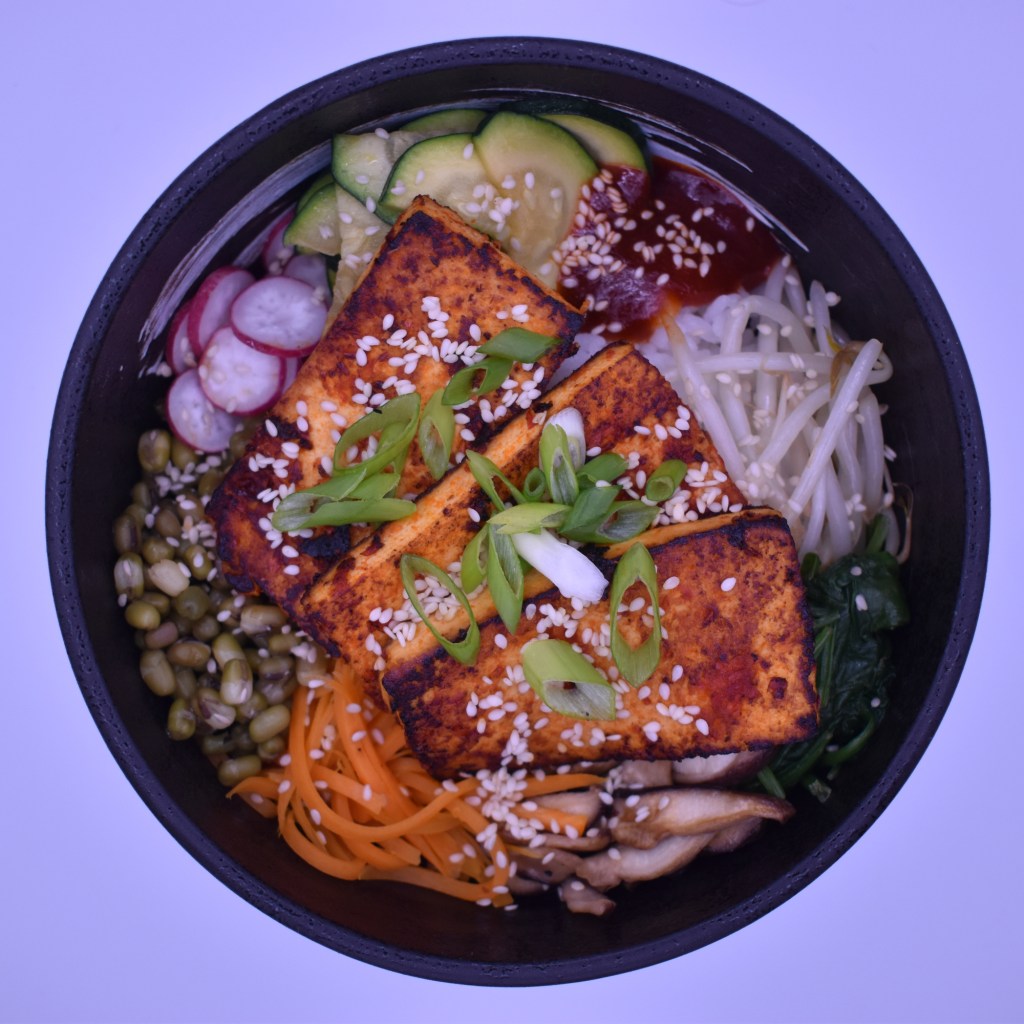
Bibimbap translates to “mixed rice”, (Bibim meaning “mixing” and Bap being rice), a much deserved name since the dish is served as a bed of rice with individual components dotted around the bowl and mixed together just before eating. The key to the best Bibimbaps is to season each component individually so that every bite is truly full of flavour. Bibimbap is served warm, so you don’t need to cook every component at the same time, cook them one by one and set aside until you are ready to serve.
Ingredients
- 2 servings Short grain rice (sushi rice)
- Chilli soy tofu (recipe here)
- 1 Tbsp Toasted sesame seeds
- 1 Sliced Spring onion
- Vegetable oil for cooking
Your Choice of Vegetables
- Shiitake mushrooms
- Carrot
- Courgette
- Spinach
- Beansprouts
- Radish
- Cucumber
- Cooked Mung beans or black soy beans
Seasonings for the Vegetables
- Sesame oil or toasted sesame oil
- Soy sauce or tamari for gluten free
- (optional) Sake or mirin
For the Sauce (or try this less spicy version)
- 1 Tbsp Gochujang chilli paste (Some are not gluten free)
- 2 Tsp Sesame oil or toasted sesame oil
- 1 Tsp Soy sauce or tamari for gluten free
- 2 Tsp Maple syrup
- (optional) 1 clove garlic, minced or finely sliced
Method
Wash the rice by submerging it in cold water in a large bowl or saucepan, using your hand, mix the rice until the water becomes cloudy. Drain the water and repeat a few times until the water is clearer (about 3 to 5 times). Cook the rice according to packet instructions (the ratio of rice to water should be about 1:1.2 ish, so a little more water than rice).
For the sauce simply mix all of the ingredients together in a bowl until smooth.
Prepare the vegetables individually, cutting them into bite sized pieces, sauté, blanch or leave raw as you see fit. While cooking, season each of the vegetables with a little soy sauce (about 1/2 a tsp) and mix in a little sesame oil once off the heat. You can add some Sake or mirin while sautéing carrots and/or courgette and add some sugar or maple syrup to beans. Cook each component one by one and set aside.
Pan fry the tofu in a drizzle of oil until it develops some colour on each side, adding additional marinade while cooking. You may find it easier to mix everything together if you cut the tofu into bite sized slices first, or add the tofu after everything else has been mixed together.
In a bowl, place a serving of rice and top with each of the vegetables and tofu, add a dollop of the sauce and top with a sprinkle of toasted sesame seeds and sliced spring onions and serve. Take a second to admire the work of art you have created and then thoroughly mix it all together until the sauce and vegetables are well mixed into the rice.
Notes
Gochujang can be very spicy, my alternative sauce has more ingredients to dilute the gochujang without sacrificing flavour (and is my preferred version). If you want an increased spice level you can mix in some extra gochujang to your bowl.
Feel free to experiment with other vegetables too, the list I have provided is far from exhaustive.
Short grain rice is recommended, but Jasmine rice works too.
Many of the vegetables can be cooked in different ways, you can blanch or sauté the carrot, use raw radish and cucumber or try blanching them.
I like to use toasted sesame oil, but untoasted also works, it’s just a matter of preference.


Bibimbap (Korean mixed rice)
A classic Korean dish packed full of vegetables.
Ingredients
- 2 servings Short grain rice (sushi rice)
- Chilli soy marinated tofu
- 1 Tbsp Toasted sesame seeds
- 1 Sliced Spring onion
- Vegetable oil for cooking Your Choice of Vegetables
- Shiitake mushrooms
- Carrot
- Courgette
- Spinach
- Beansprouts
- Radish
- Cucumber
- Cooked Mung beans or black soy beans Seasonings for the Vegetables
- Sesame oil or toasted sesame oil
- Soy sauce or tamari for gluten free
- (optional) Sake or mirin For the sauce
- 1 Tbsp Gochujang chilli paste
- 2 Tsp Sesame oil or toasted sesame oil
- 1 Tsp Soy sauce
- 2 Tsp Maple syrup
- (optional) 1 clove garlic, minced or finely sliced
Directions
Wash the rice by submerging it in cold water in a large bowl or saucepan, using your hand, mix the rice until the water becomes cloudy. Drain the water and repeat a few times until the water is clearer (about 3 to 5 times). Cook the rice according to packet instructions (the ratio of rice to water should be about 1:1.2 ish, so a little more water than rice).
For the sauce simply mix all of the ingredients together in a bowl until smooth.
Prepare the vegetables individually, cutting them into bite sized pieces, sauté, blanch or leave raw as you see fit. While cooking, season each of the vegetables with a little soy sauce (about 1/2 a tsp) and mix in a little sesame oil once off the heat. You can add some Sake or mirin while sautéing carrots and/or courgette and add some sugar or maple syrup to beans. Cook each component one by one and set aside.
Pan fry the tofu in a drizzle of oil until it develops some colour on each side, adding additional marinade while cooking. You may find it easier to mix everything together if you cut the tofu into bite sized slices first.
In a bowl, place a serving of rice and top with each of the vegetables and tofu, add a dollop of the sauce and top with a sprinkle of toasted sesame seeds and sliced spring onions and serve. Take a second to admire the work of art you have created and then thoroughly mix it all together until the sauce and vegetables are well mixed into the rice.
 love tofu
Leave a comment